March 28th, 2026
At March 28th, 2026 we had our first art+science webinar course!
The Hidden World of Lichens — Our First Monthly Webinar Recap
The Science: What Makes Lichens So Special?
Dr. Xinhui Yu, led a 15-minute journey into the tiny organisms most of us walk right past. Lichens aren’t just one living thing — they’re a partnership between fungi and algae (or cyanobacteria), layered together like a living sandwich. The fungus provides structure and protection; the photosynthetic partner makes the food.
We learned to tell apart the three main lichen forms — crustose (thin as paint on a rock), foliose (leafy rosettes), and fruticose (branching upward like tiny trees) — and discovered that lichens are among the toughest organisms on Earth, surviving arctic deserts, high mountain peaks, and even the vacuum of outer space.
The Art: Seeing Like a Lichen
Ms. Huang, artist and art educator, then guided everyone through a hands-on drawing activity inspired by the colors and shapes of lichens. The focus was on monochromatic color — using different shades, tints, and tones of a single color to capture the calm, organic feeling that lichens evoke. Participants grabbed whatever they had at home — colored pencils, watercolors, crayons, or just a graphite pencil — and created their own lichen-inspired pieces.
Two of our attendees shared their finished artwork with us, and we were blown away by what they created.
Art Piece by Huntress:
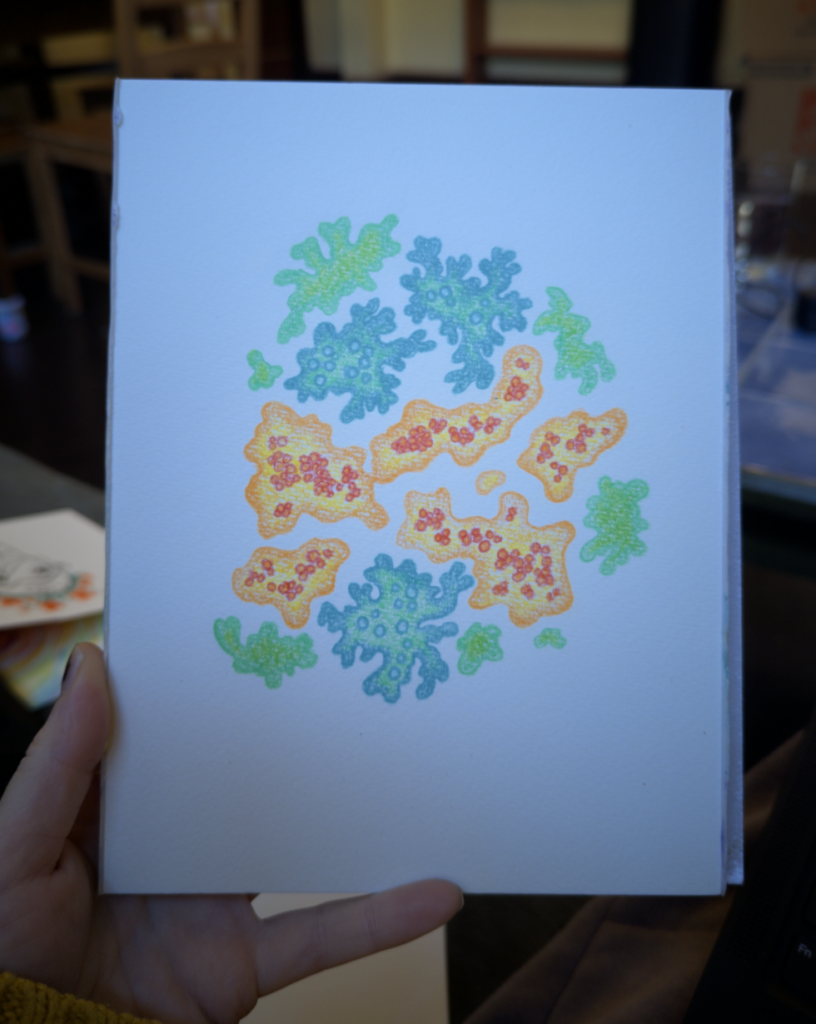
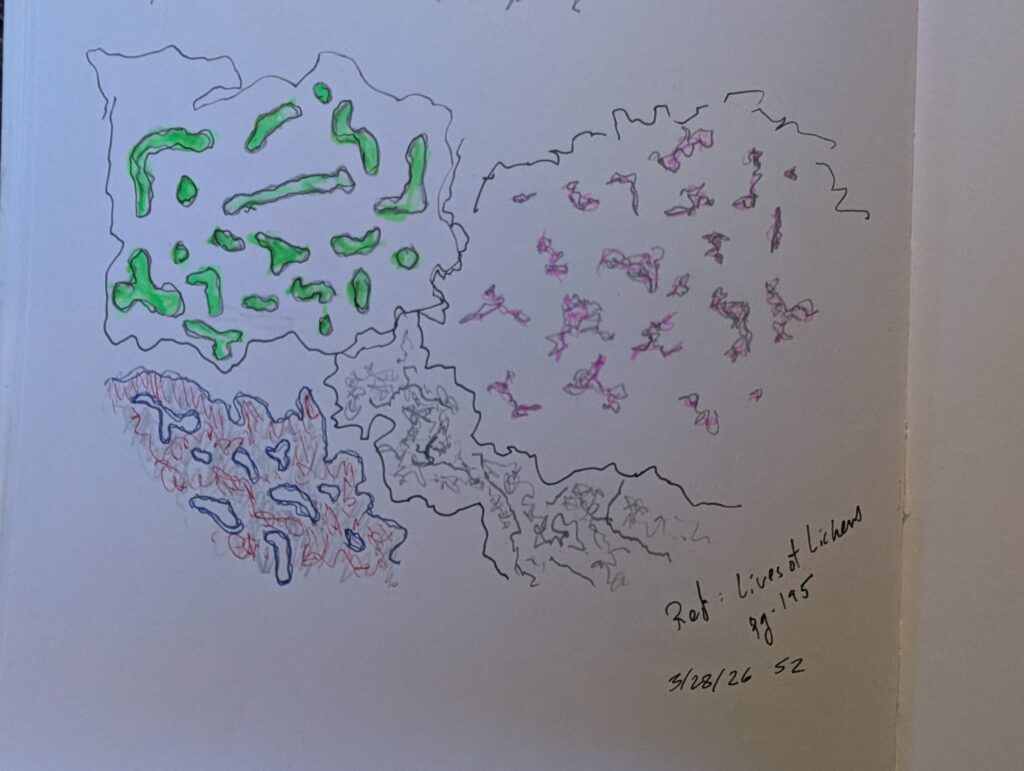
Art piece by Sarah Zager:
May 9th, 2026
At May 9th, 2026 we had our second art+science webinar course!
Explore the Shapes and Colors of Crystals — Our Second Monthly Webinar Recap
The Science: Why Do Crystals Have Such Beautiful Shapes?
Rhiannon Garrard, geologist and educator, led a 15-minute journey into the dazzling world of crystals. We explored how crystals form, why they grow into such unique shapes, and how their structures create the patterns we see in nature.
Participants learned that crystals are not just pretty minerals — they are organized structures built from repeating patterns. These patterns can create sharp points, flat faces, branching forms, and sparkling surfaces. We also looked at the vibrant colors of crystals and discussed how minerals, light, and tiny impurities can all influence the colors we see.
The Art: Painting the Colors of Crystals
Ms. Huang, artist and art educator, then guided everyone through a hands-on watercolor activity inspired by the shapes and colors of crystals. The focus was on observing crystal forms, layering colors, and using watercolor techniques to capture their glowing, transparent, and sparkling qualities.
Participants used watercolor or other materials they had at home to create their own crystal-inspired artwork, combining scientific observation with creative expression.
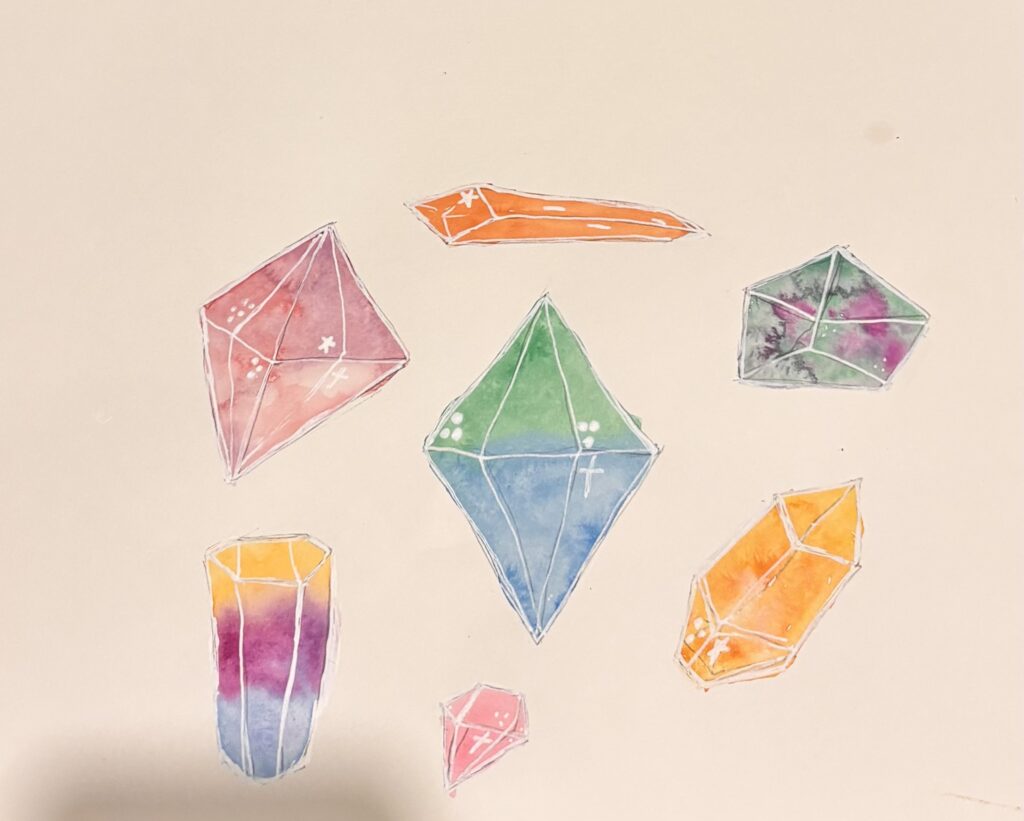
The example Erica created:
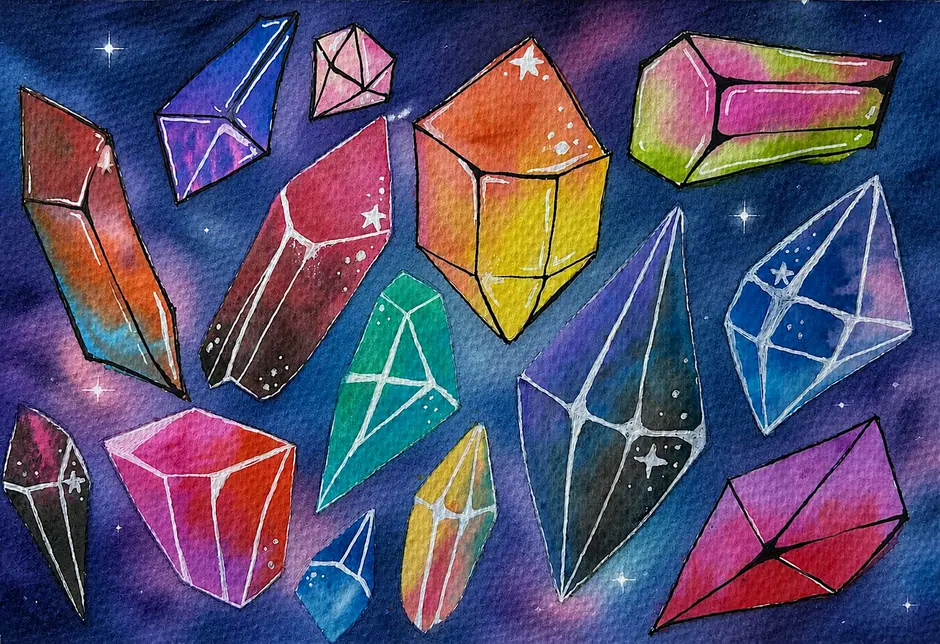
Smita Chakraborty’s Creation
Thank you, Smita, for sharing this lovely artwork with us!